
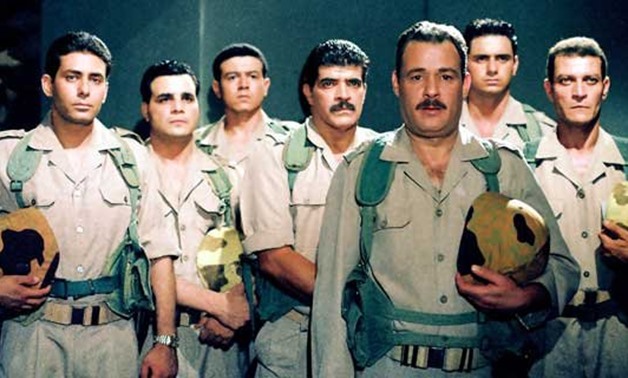
Every year, in memory of the 6th of October War, Egyptians remember the songs, photos, and memorabilia made to commemorate it, passed down through generations. Cinema, however, has a different role. It does not just tell the story of a victory, but also the stories of the people who lived through the years before it.
Commemorating the anniversary of the October War, here are five films that take us on a cinematic journey from the effects of the ’67 defeat and the War of Attrition to the moment everyone awaited: the Crossing.
The Bullet Is Still in My Pocket (Al-Rasasa la tazalu fe gaibi)
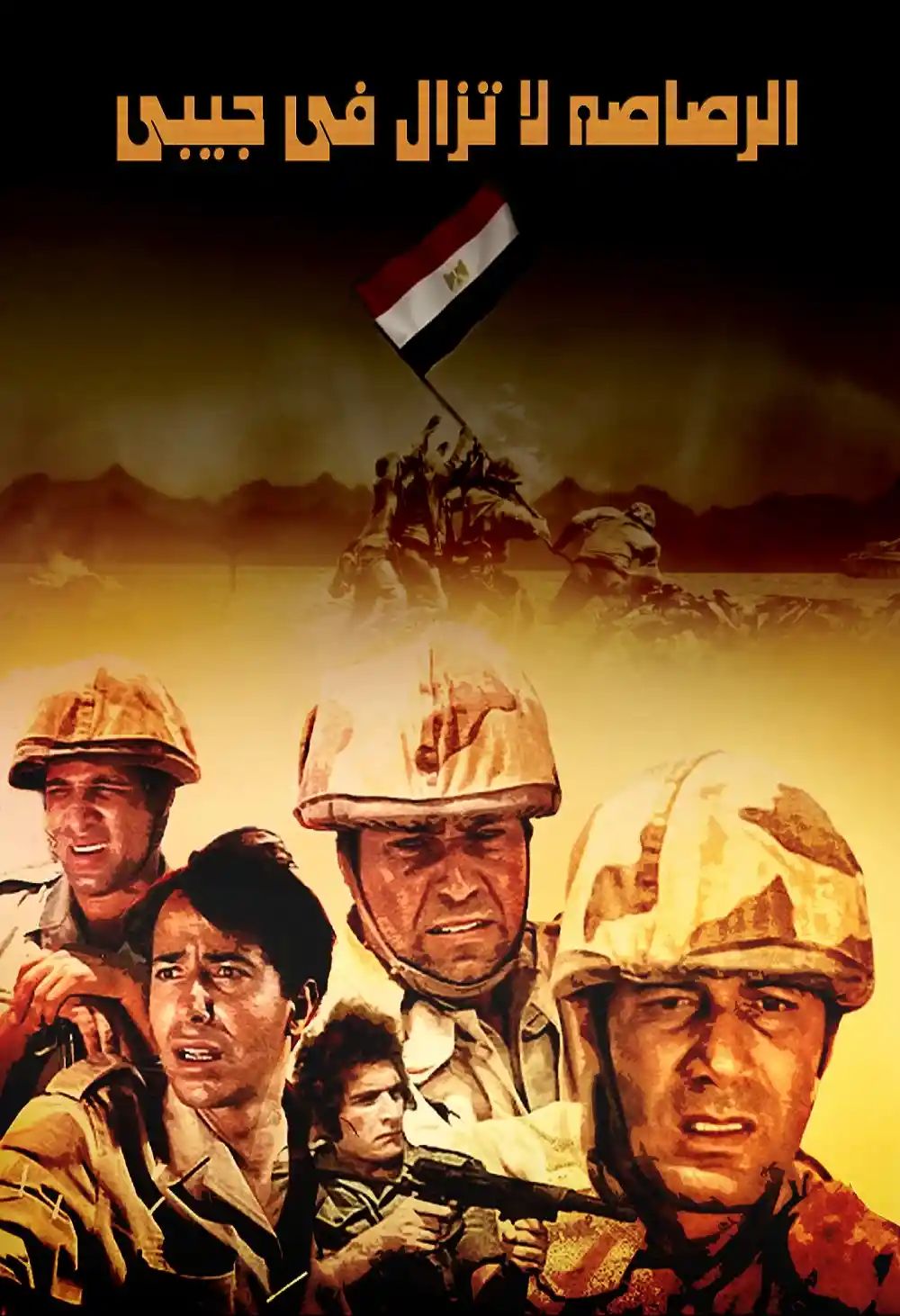
Image via website
If there is one film that remains a direct reminder of the October War in Egyptian popular memory, it is hard to start with anything other than The Bullet Is Still in My Pocket. Released on October 6th, 1974, on the first anniversary of the War, the film was directed by Hossam El Din Mostafa and based on a story, screenplay, and dialogue by Ihsan Abdel Quddous, with Ramses Naguib writing the scenes depicting the 1973 October War. It starred Mahmoud Yassin, Nagwa Ibrahim, Hussein Fahmy, Youssef Shaaban, Said Saleh, and Salah El Saadany.
The story begins with the defeat of 1967, following Mohamed El Maghawry, played by Mahmoud Yassin, as he returns from war weighed down by defeat. Gradually, he begins to regain his confidence in himself, the army, and the possibility of turning defeat into victory. When the October War finally arrives, the crossing of the Suez Canal becomes the culmination of a journey that began six years earlier. Some aspects may feel overly melodramatic today, but it is hard to deny the strength of Mahmoud Yassin’s performance as one of the most prominent faces of Egyptian war films during that period.
Sons of Silence (Abnaa El Samt)
Image via website
Released in the same year, Sons of Silence (Abnaa El Samt) approached the war differently. Directed by Mohamed Radi and based on a story, screenplay, and dialogue by Maguid Tobia, the film featured Nour El Sherif, Mervat Amin, Mahmoud Morsi, Madiha Kamel, Ahmed Zaki, Mohamed Sobhi, Hamdy Ahmed, and Sayed Zayan. The film is in no rush to reach October. Instead, we follow a group of soldiers stationed along the Suez Canal during the War of Attrition, each having left an entire life behind and knowing that confrontation is coming without knowing when.
Alongside them, the story follows journalist Nabila, played by Mervat Amin, her fiancé Magdy, played by Nour El Sherif, and their editor-in-chief, Ragai, portrayed by Mahmoud Morsi. Through both the front line and life in Cairo, the film moves from the aftermath of the 1967 defeat to the long-awaited crossing. Its strength lies in focusing not on one extraordinary hero, but on ordinary young men whose modest dreams are suddenly overtaken by history.
A Moment in Time (Al Omr Lahza)
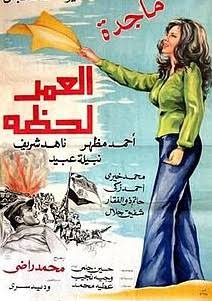
Image via website
Mohamed Radi returned to the theme of war in 1978 with A Moment in Time (Al Omr Lahza), based on a novel by Youssef El Sebai. The film starred Magda, Ahmed Mazhar, Nahed Sherif, Nabila Ebeid, and Mohamed Khairy, alongside Ahmed Zaki in the early stages of his career. This time, the perspective is different. Neamat, played by Magda, is a journalist who begins volunteering in hospitals, grows closer to soldiers and the wounded, and eventually makes her way to the front line herself.
Through her journey, the film looks beyond combat to the families and people affected by war. While it remains very much a product of its time, particularly in its romance and melodrama, Magda’s character gives the story a distinctly human perspective.
Tales of a Stranger (Hekayat El Ghareeb)

Image via website
Tales of a Stranger can be considered one of the finest cinematic portrayals of this period. Directed by Enam Mohamed Ali, the film features Mahmoud El Gendy, Hussein El Imam, Sherif Mounir, Mohamed Mounir, Hoda Sultan, Safaa El Toukhy, and many others. Here, there is no conventional military hero. Instead, the protagonist is Abdel Rahman, an ordinary Egyptian whose life was deeply affected by the 1967 defeat, as it was for millions of Egyptian households.
The film takes us to the city of Suez, which becomes far more than a backdrop to the war. Through an ordinary story that gradually becomes part of something much larger, Tales of a Stranger explores how frustration and lost confidence begin to shift through resistance and war.
The Great Loyalty (Al-Wafaa Al-Azeem)
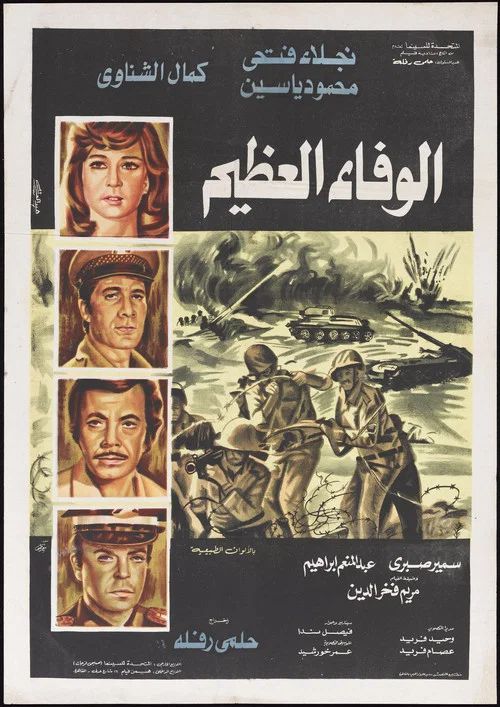
Image via website
Released in 1974, The Great Loyalty, directed by Helmy Rafla and written by Faisal Nada, brought together Mahmoud Yassin, Naglaa Fathy, Kamal El Shenawy, and Samir Sabry in a story combining family drama, romance, and the October War. At the centre of the story are Walaa, played by Naglaa Fathy, and Safwat, played by Mahmoud Yassin, whose relationship is rejected by Walaa’s adoptive father because of an old family conflict. Walaa eventually marries Adel, played by Samir Sabry, but when the October War begins, both men find themselves serving together in the Egyptian army.
What follows goes beyond the love triangle, as personal rivalries give way to friendship and sacrifice. While the film leans heavily into the romantic melodrama of its era, it connects national victory with personal reconciliation.
Beyond the Battlefield
Perhaps what makes these films worth returning to is that they did not only show battles and tanks. They showed the soldier who lived through the ’67 defeat, the family waiting for him, the people living through the War of Attrition, and a society trying to regain confidence in itself. Surprisingly, the number of films documenting the October War is not as large as one might imagine. Yet among them are films we can still watch today, each revisiting the war from a different angle and taking us from the weight of defeat to the moment everyone had been waiting for: the Crossing.